Where to Find BioTeam at Bio-IT World 2026
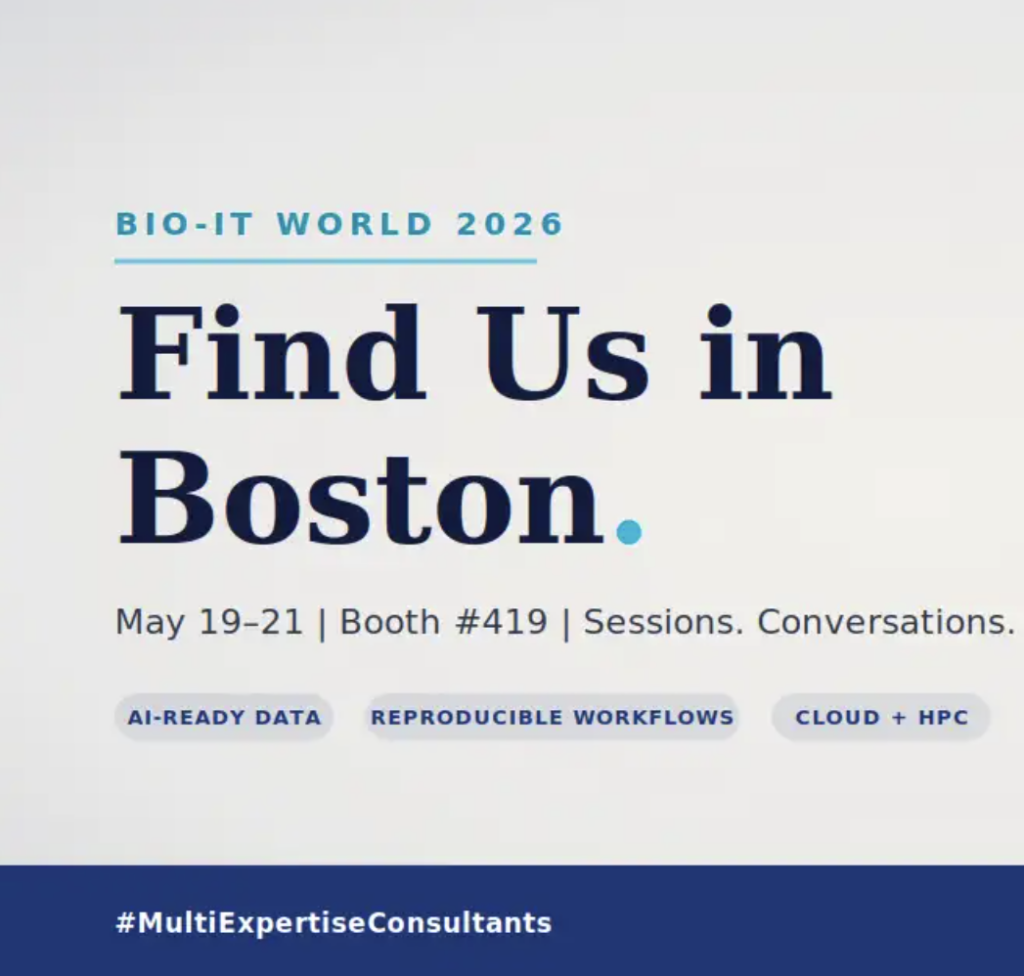
Bio-IT World is almost here, and BioTeam will be participating across workshops, technical sessions, track leadership, networking events, and podcast conversations throughout the week in Boston.This year, many of the conversations we are having with research organizations, platform teams, and infrastructure leaders center around reproducible AI workflows, scientific data operations, cloud/HPC modernization, and preparing research […]
Schrödinger Best Practices vs AWS PCS Limits

Modern HPC integration practices for Schrödinger workloads tend to want 10–12 Slurm partitions and matching host entries, because Maestro doesn’t let chemists pass Slurm arguments directly. That design preference collided with AWS Parallel Computing Service on a recent deployment: PCS has a hard, non-adjustable cap of 10 partitions and 10 compute node groups per cluster. […]
Four FTRs and Counting…
BioTeam now has four offerings on the AWS Marketplace, each validated through the AWS Foundational Technical Review (FTR) process. BioTeam has been working with AWS since 2007, when the platform was still in beta. That history runs deep. Over nearly two decades, we have built, migrated, and optimized scientific computing environments for pharma, biotech, federal […]
Agentic Biotech Is Coming Fast. Most Systems Aren’t Ready.
The life sciences industry has spent the last several years getting excited about AI. Now it’s getting specific. Jennifer Wortman, Nick George, Brian Osborne, and Abby Farrar were in New York last week at the AWS Life Sciences Symposium. The conversation had moved on from “should we use AI?” to something harder: how do you […]
BioTeam’s AWS Roundtable Boston
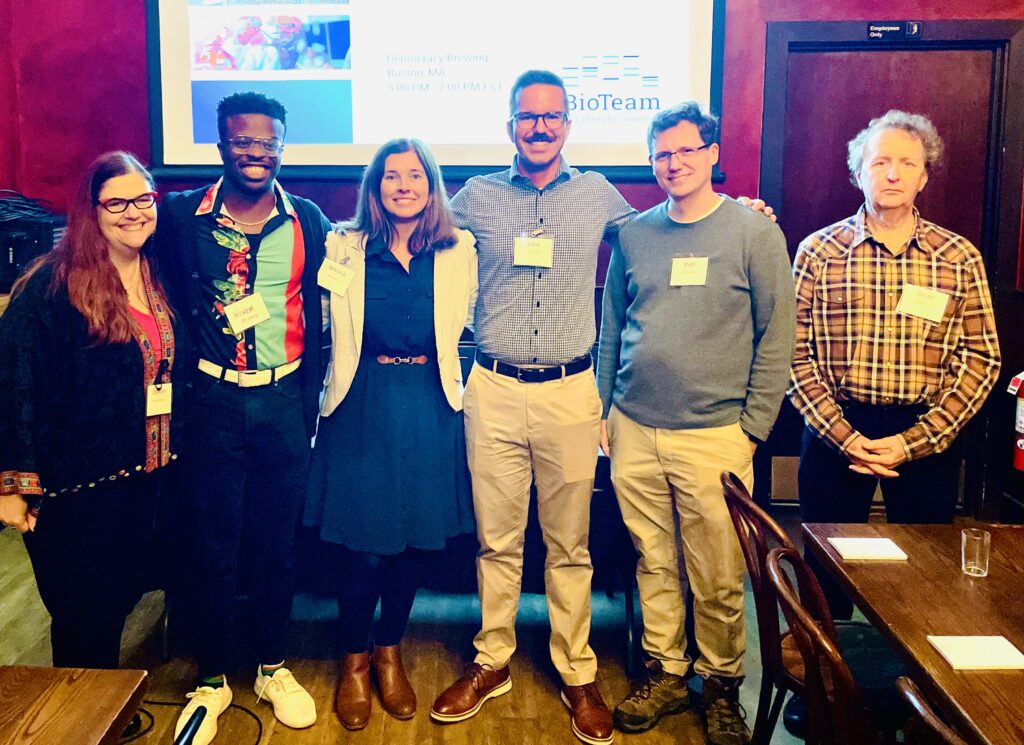
Building AI-Ready Infrastructure for Biomedical Research In November 2025, BioTeam hosted a Boston roundtable with professionals from across pharma, biotech, academic medical centers, and government research institutions focused on one of the most pressing challenges in life sciences today: how to make biomedical data truly AI-ready. Co-hosted with Amazon Web Services, the discussion centered on […]
License-Aware Cloud HPC: Accelerating Discovery with Schrödinger, Cresset, and Posit
Summary Computational chemistry software licenses are among the most expensive line items in a drug discovery budget. When those licenses run on cloud HPC, poor integration creates problems: idle licenses burn money, contention between researchers stalls work, and GPU-heavy notebook sessions run around the clock even when no one is using them. It’s not just […]
Schrödinger at Scale: Enterprise HPC Infrastructure, Deployed in Minutes

Summary BioTeam partnered with a healthcare-focused investment firm whose mission is to advance healthcare innovation by funding innovative, new biotech organizations. These organizations required an automated, secure, scalable, and repeatable cloud-based HPC environment on AWS for their drug discovery pipelines. The client needed a compliant technology foundation that could be deployed at scale across multiple […]
Migration of Comp Chem Applications to Nextflow in AWS

BioTeam partnered with a major hyperscaler to migrate generative AI tools used in computational chemistry workflows to a managed cloud service running Nextflow.
MLOps in Research Environments- AWS Boston Roundtable
Lightning Talk Series: MLOps in Research Environments-AWS Boston Roundtable New users, new data, drift, audits, security, time. All require production-ready thinking. BioTeam’s Senior Scientific Consultant, Wisdom Akpan, covers this clearly in a 5-minute lightning talk on MLOps in Research Environments. Check it out, video linked below. This talk is part of our event Building AI-Ready […]
Using Your Own AI for Data- AWS Boston Roundtable
Lightning Talk Series:Using Your Own AI for Data-AWS Boston Roundtable BioTeam’s Principal Scientific Consultant, Brian Osborne, continues our Lightning Roundtable with a sharp, 5-minute look at what Using Your Own Data for Al really means for scientific teams. Watch his insight into using your own data across cloud, content platforms, personal agents, and on-prem systems […]