
Building AI-Ready Infrastructure for Biomedical Research
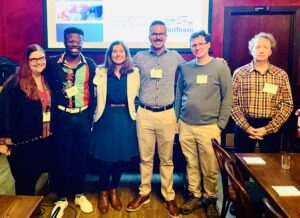
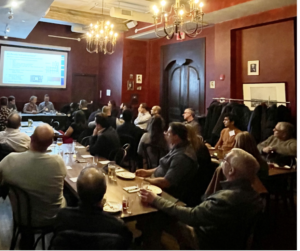
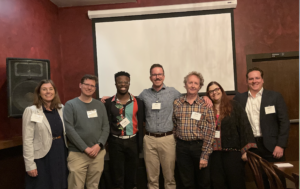
In November 2025, BioTeam hosted a Boston roundtable with professionals from across pharma, biotech, academic medical centers, and government research institutions focused on one of the most pressing challenges in life sciences today: how to make biomedical data truly AI-ready.
Co-hosted with Amazon Web Services, the discussion centered on a challenge many organizations are actively working through as AI initiatives accelerate: despite major investments in compute and models, progress often slows when the underlying data and infrastructure are not designed to support AI-driven workflows.
The conversation focused on a practical question:
How do organizations move from data chaos to data readiness?
Attendees explored the real-world barriers that continue to slow AI adoption across biomedical research, including data silos, incompatible formats, governance constraints, and legacy infrastructure that was never built for modern AI workloads.
The evening included a series of brief expert perspectives followed by an open roundtable discussion that encouraged candid conversation across sectors. Topics ranged from scalable data foundations and scientific metadata strategy to infrastructure investment, reproducibility, and the operational realities of supporting AI in regulated research environments.
Perspectives from research IT, cloud architecture, data science,and scientific operations helped ground the discussion in both strategic and operational realities, highlighting just how cross-functional AI readiness work has become.
Explore the Roundtable Sessions

For anyone looking to dive deeper into the topics discussed, recordings from the featured roundtable sessions are available below:
- Generative AI for Drug Discovery – Watch the talk
- AI in Context – Watch the talk
- Using Your Own Data for AI – Watch the talk
- MLOps in Research Environments – Watch the talk
A consistent theme throughout the evening was that AI readiness in biomedical research is fundamentally a data and systems challenge.
Schema design, metadata fidelity, interoperability, and reproducible compute environments all play a central role in determining whether AI workflows generate results that are both scalable and scientifically reliable.
For organizations working through the transition from data chaos to data readiness, these conversations remain both timely and essential and if your team is navigating similar challenges, we would love to hear from you.