After Discovery
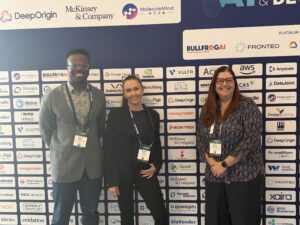
In October, BioTeam joined researchers, technology leaders, and industry colleagues at the AI Drug Discovery and Development Summit (AIDDD 2026), held at the Boston Marriott Copley Place.
Dr. Jennifer Wortman, BioTeam’s President and Managing Director, participated in the HPC panel, “What Comes After Discovery? Extending Scientific Compute Strategy Across Development and Operations.” BioTeam also joined the roundtable, “Building TechBio at Scale: Data, Compute, Talent, and Translation.”

Where things break after discovery
Moving scientific workflows from discovery into development and operations introduces challenges that more computing power or better models alone cannot solve.
Through BioTeam’s consulting work, Jennifer has seen how organizations struggle with this transition. Often, the biggest obstacles aren’t technical limitations but gaps in ownership, missing context, and disconnected workflows.
A model may perform well during discovery, but putting its results to work across an organization requires more than computational performance. Teams need to understand where data came from, how it was processed, who is responsible for it, and whether the supporting systems can meet operational and regulatory requirements.
Several considerations become especially important as organizations extend their scientific computing strategies:
- Preserving scientific context. Metadata, provenance, and data lineage need to remain accessible as information moves between teams and systems. Without that context, even valuable results can become difficult to interpret, reproduce, or reuse.
- Establishing clear responsibilities. As workflows cross organizational boundaries, teams need clarity about who owns the data, maintains the systems, and makes decisions when changes are required.
- Connecting workflows across teams. Discovery, development, and operations often rely on different tools, processes, and expectations. Shared standards and thoughtful integration help prevent information from becoming fragmented as work progresses.
- Preparing for operational requirements. Moving beyond exploratory research means accounting for reproducibility, security, access controls, auditability, and change management. Building these capabilities early can reduce the complexity of transitioning workflows into regulated environments.
These challenges are not specific to any model, platform, or vendor. They reflect the broader need to align scientific goals with the people, processes, and infrastructure that support them.
Building TechBio at scale
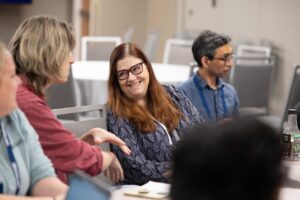
The roundtable, “Building TechBio at Scale: Data, Compute, Talent, and Translation,” explored the challenges of building organizations that can turn scientific innovation into sustainable operations.
For growing TechBio companies, decisions about data architecture, computing infrastructure, and organizational responsibilities can have lasting consequences. Approaches that work well for a small research team may become difficult to maintain as datasets grow, workflows become more complex, and additional teams need access to the same information.
Scaling successfully requires more than adding infrastructure. It means creating an environment where scientists, computational experts, and operational teams can work effectively together, with the flexibility to accommodate new technologies and evolving scientific needs.
The discussions reinforced an important consideration for organizations at every stage: planning for how scientific work will evolve can be just as important as the technologies supporting it today.
Thank you to the AIDDD organizers, our fellow panelists, and everyone who contributed to the discussions.
Is your organization preparing to move scientific workflows beyond discovery or building a computing and data strategy to support growth? BioTeam can help. Contact us at info@bioteam.net.