Local LLMs for real HPC work, Part II: writing complex real-world AWS IAM policies
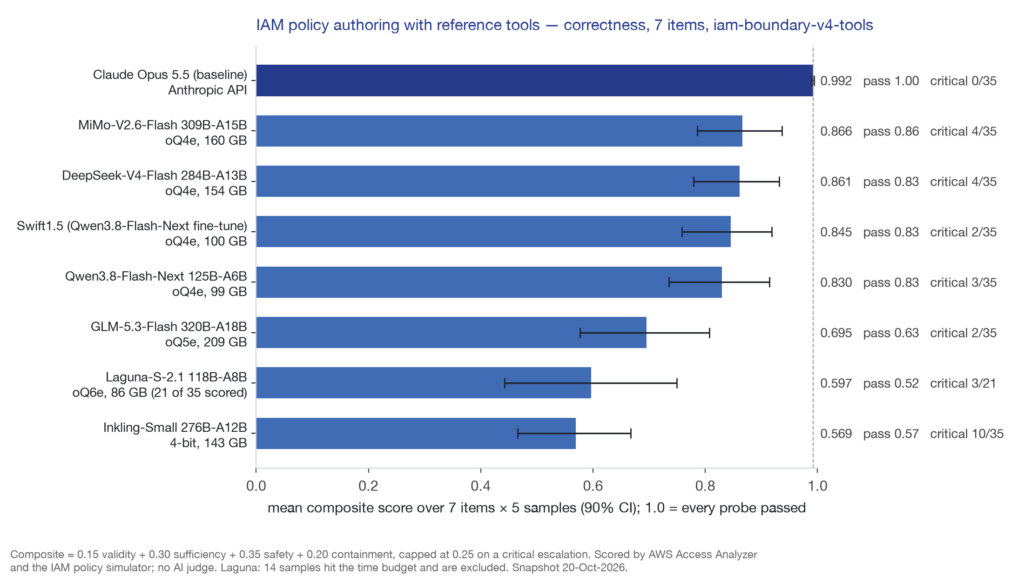
Local LLMs for real HPC work — a series Part I: Two Macs, a test harness, and the speed numbers (published 15-Oct-2026) Part II: Writing complex real-world AWS IAM policies (this post) Part III: Root-causing failed Schrödinger jobs from the logs (future post) Part IV: Letting a local model audit and fix a repo on […]
Consulting Brief: ParallelCluster Guardrails When Prod Is Shared

Update 17-Oct-2026: the client’s SCP now lets our ParallelCluster operator role delete CloudWatch alarms and dashboards, so our clusters run with monitoring on again. See the update section. TL;DR It is counterintuitive, but it is safer to let AWS ParallelCluster deploy itself with broad permissions than to hand it pre-made roles. When ParallelCluster creates its […]
Local LLMs for real HPC work, Part I

Local LLMs for real HPC work — a series Part I: Two Macs, a test harness, and the speed numbers (this post) Part II: Writing complex real-world AWS IAM policies (published 20-Oct-2026) Part III: Root-causing failed Schrödinger jobs from the logs (future post) Part IV: Letting a local model audit and fix a repo on […]
7 Signs It’s Time to Hire a Scientific IT Consulting Firm

Knowing when to bring in outside expertise can determine whether your next scientific IT initiative succeeds or stalls. Here are seven common signs that your organization could benefit from a specialized scientific IT consulting partner. Scientific organizations are under increasing pressure to modernize research infrastructure, prepare for AI, manage rapidly growing datasets, and accelerate discovery. […]
Claude Science Beyond Chat: Connecting AI to Scientific Computing
The introduction of AI workbenches such as Claude Science signals an important shift in how researchers interact with computational infrastructure. Instead of treating AI as a standalone assistant for writing code or summarizing literature, scientists are beginning to use AI as a gateway to the tools, software, and computing resources that power modern research. As […]
Helping Researchers Move from Idea to Analysis in Seconds
Scientific computing has become an essential part of modern life sciences research. From computational chemistry and molecular modeling to bioinformatics and AI, researchers depend on specialized software and high-performance computing (HPC) to accelerate discovery. Unfortunately, accessing those tools isn’t always as simple as launching an application. Researchers often encounter delays caused by infrastructure provisioning, software […]
Connecting Compute To Claude Science

July 2026 Update: Since writing the post below, I was able to get more hands-on with Claude Science including: Confirming that I can proxy AWS SSM traffic over the native Claude Science SSH connector; allowing access to private AWS HPC resources and compute servers Developed a Claude Science skill that can use the SSM […]
Your old AWS ParallelCluster stacks will NOT break in 2026
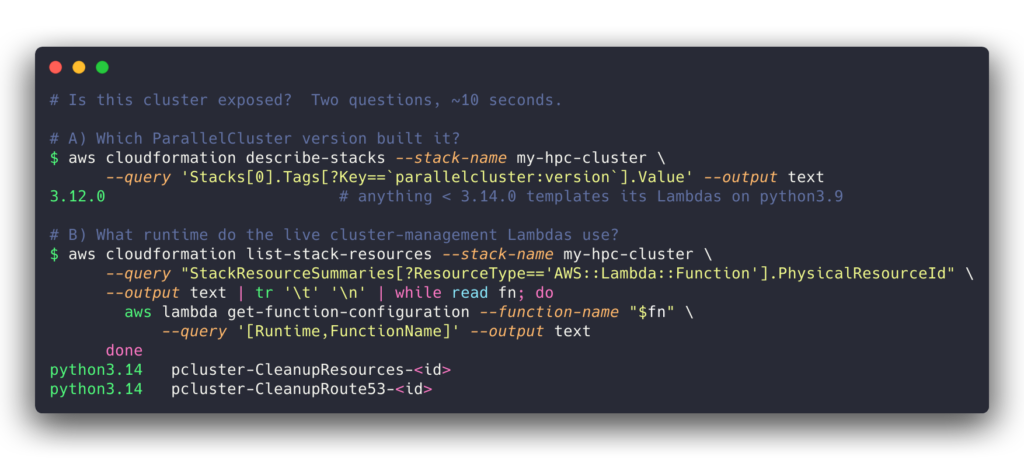
Note: This post is pure google bait designed to help others who run into the same problem. We hope it helps! We had been advising clients to rebuild older ParallelCluster stacks — the ones whose cleanup Lambdas are templated on python3.9 — by mid-2026, ahead of the published Lambda block dates. Those dates have moved. […]
Bio-IT World’s Trends from the Trenches Podcast: Reducing Data Friction for AI and HPC in Life Sciences

Life sciences organizations are generating more data than ever before, but many research environments still struggle with fragmented infrastructure, disconnected workflows, and data spread across storage systems, sites, and clouds. In this episode of Bio-IT World’s Trends from the Trenches podcast, Adam Marko, Field CTO for Life Sciences at Hammerspace, joins BioTeam’s Jessica StLouis to […]
Why HPC Is Finally Becoming Accessible to Everyday Researchers
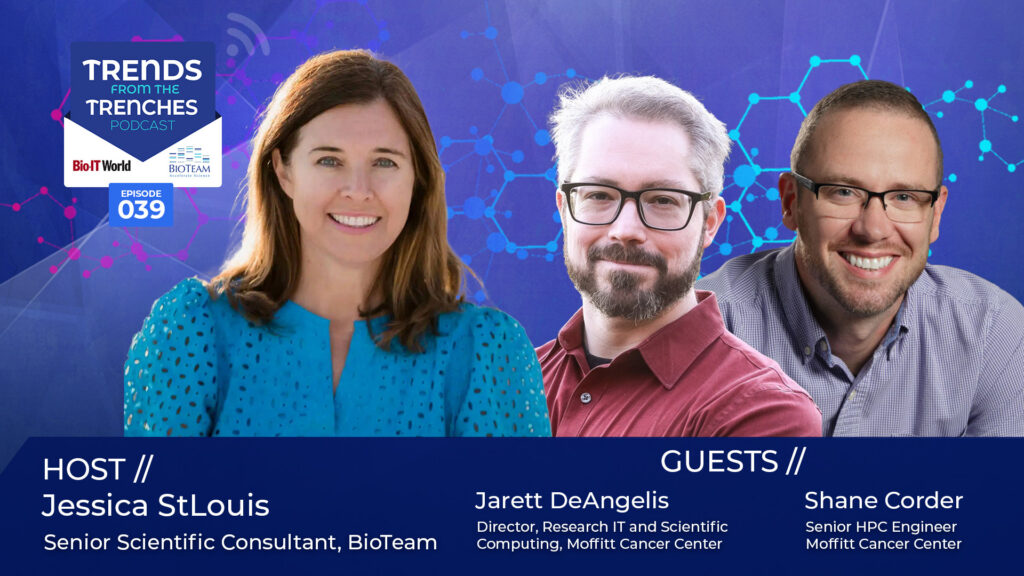
High-performance computing (HPC) has become essential to modern science, but many researchers still face major barriers when accessing compute resources, collaborating across institutions, and managing scientific data workflows. Increasingly, research organizations are rethinking computing infrastructure not just as backend technology, but as a scientific instrument designed to accelerate discovery, reduce friction, and make advanced computing […]