

The introduction of AI workbenches such as Claude Science signals an important shift in how researchers interact with computational infrastructure. Instead of treating AI as a standalone assistant for writing code or summarizing literature, scientists are beginning to use AI as a gateway to the tools, software, and computing resources that power modern research.
As these capabilities mature, one challenge is becoming increasingly clear: AI is only as powerful as the scientific infrastructure it can securely access.
Researchers don’t simply need answers. They need AI systems that can interact with HPC clusters, scientific software, cloud environments, and specialized research workflows while maintaining the security, governance, and reproducibility that modern life sciences demand.
Chris Dagdigian recently explored this challenge in two BioTeam technical articles. In one, he examined how Claude Science could be connected to real-world scientific compute environments. As he put it:
“Since my day job involves helping scientists access and use large-scale HPC and IT infrastructure to ‘get science done,’ my first thought was, ‘How the hell do I connect this to my local GPU and HPC systems?'”
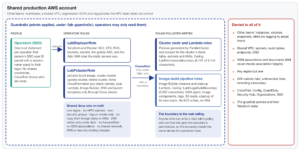
That question quickly evolved into a second challenge: enabling Claude Science to interact securely with private AWS HPC environments rather than relying on publicly exposed SSH servers.
As Chris wrote:
“It’s 2026, and who wants to hang an SSH server out on the naked, public Internet?”
His work demonstrates that AI assistants don’t have to remain isolated from enterprise scientific infrastructure. By leveraging AWS Systems Manager (SSM), Claude Science can securely interact with private AWS HPC resources without exposing compute infrastructure to the public internet, creating a model that better aligns with enterprise security practices while preserving researcher productivity.
This is part of a broader trend we’re watching across life sciences. The conversation is moving beyond asking whether AI can help scientists write code or summarize papers. Increasingly, organizations are exploring how AI can become an active participant in scientific workflows by securely orchestrating computation, accessing trusted infrastructure, and helping researchers move more efficiently from question to analysis.
As AI capabilities continue to evolve, the next generation of scientific computing will likely depend not only on smarter models, but also on thoughtful integration with the secure, scalable infrastructure researchers already rely on every day.