

Summary
BioTeam partnered with a biomedical research institution within the National Institutes of Health (NIH) to assess its existing data infrastructure and develop a strategic roadmap for integrating artificial intelligence capabilities into its large-scale biomedical data repositories and services.
As a steward of globally significant biomedical data resources, the organization sought to ensure its infrastructure, workflows, and data management practices could support emerging AI-enabled research while maintaining the reliability and integrity of mission-critical systems.
BioTeam conducted a comprehensive technical and operational assessment, delivering actionable recommendations and validated prototype approaches to enable scalable, secure, and sustainable AI adoption.
Challenge
The organization manages extensive biomedical data assets that support a global research community. These systems, developed and expanded over many years, form a critical foundation for scientific discovery.
Integrating AI-enabled capabilities into this environment required careful evaluation of existing infrastructure, operational workflows, and organizational readiness.
Key challenges included:
- Legacy infrastructure and complex, distributed systems supporting large-scale biomedical data repositories
- Limited internal capacity and specialized expertise to evaluate and deploy AI-enabled systems
- The need to ensure privacy, security, and operational reliability while introducing new computational capabilities
- Organizational complexity requiring coordination across technical, scientific, and operational stakeholders
Addressing these challenges required a structured technical assessment to identify practical opportunities for AI integration while minimizing risk and preserving operational continuity.
Approach
BioTeam conducted a comprehensive assessment of infrastructure, data assets, workflows, and organizational readiness.
This engagement included:
- Facilitated workshops and stakeholder interviews with scientific and technical leadership
- Detailed inventory and analysis of data assets, infrastructure components, and operational workflows
- Identification of infrastructure constraints, scalability limitations, and opportunities for modernization
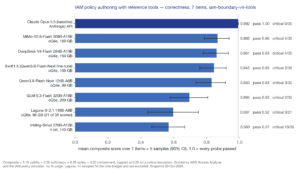
- Evaluation and validation of high-priority AI use cases through targeted prototyping and technical analysis
This process provided clear visibility into the organization’s infrastructure, operational constraints, and readiness to support AI-enabled workflows.
Outcomes
BioTeam delivered a strategic roadmap and technical guidance to support the organization’s transition toward AI-enabled biomedical data infrastructure.
Key outcomes included:
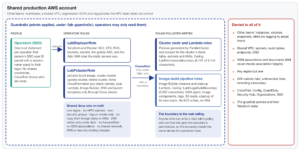
- A defined architectural and operational framework for integrating AI capabilities into existing systems
- Recommendations to improve data discoverability, accessibility, and usability
- Infrastructure modernization strategies to support scalable AI-enabled analytics and services
- Guidance for implementing automated monitoring and operational intelligence to strengthen system resilience
- Establishment of best practices for AI evaluation, governance, and deployment
This engagement provided the organization with the technical clarity and strategic direction needed to modernize its infrastructure and confidently pursue AI-enabled innovation while preserving the reliability of its critical biomedical data services.