

The BIO International Convention brought together leaders from across the life sciences ecosystem to discuss one of the industry’s biggest questions: How do we move AI from promising pilots to measurable scientific and business impact? One AI Summit session, Beyond the Hype: How AI is Actually Transforming Biopharma in 2026, reinforced a theme that echoed throughout the conference. The conversation is no longer centered on whether AI will transform life sciences. Instead, the focus has shifted to how organizations can successfully deploy AI in real-world research and development environments.

Several key themes stood out.
AI’s value comes from scale, repeatability, and speed
The greatest value AI delivers today is not replacing scientists. It is enabling scientists to work more efficiently by reducing manual effort, improving reproducibility, accelerating analysis, and allowing research teams to focus on higher-value scientific questions.
Biology is becoming more engineering-driven
AI is helping researchers move beyond traditional trial-and-error approaches. By combining computational models with experimental science, organizations can test more hypotheses, learn from every experiment, and continuously improve their probability of success.
Every function is on a different AI journey
AI adoption is occurring across target discovery, translational research, manufacturing, clinical development, and commercialization. Each area presents different scientific workflows, data requirements, regulatory expectations, and implementation challenges. There is no universal roadmap for success.
AI is changing the industry’s bottlenecks
One of the most thought-provoking discussions centered on how AI changes where organizations invest their attention.
Historically, generating experimental data was often the primary constraint. Today, many organizations are discovering that the new bottlenecks are data quality, data integration, scalable computing infrastructure, algorithm development, and deploying AI into production environments that scientists trust and use every day.
Negative results become valuable assets
Another important shift is how organizations think about failed experiments. Rather than representing dead ends, negative results become valuable training data that strengthen future models, improve predictions, and help researchers learn more efficiently over time.
Success depends on more than algorithms
Perhaps the strongest message from the session was that successful AI adoption is not simply a technology challenge. Sustainable success requires high-quality data, strong governance, scientific validation, interdisciplinary collaboration, and infrastructure capable of supporting AI at enterprise scale.
As AI continues to mature across the life sciences industry, organizations that generate lasting value will be those that invest not only in models but also in the data, infrastructure, governance, and operational discipline needed to translate AI into measurable scientific outcomes.

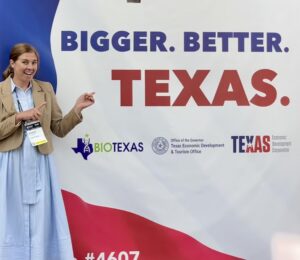
Collaboration in action
As our team heads home from BIO International 2026, one thing is clear: the conference remains an invaluable opportunity to learn, collaborate, and build relationships across the global life sciences community. From insightful technical sessions and AI Summit discussions to conversations with researchers, pharmaceutical companies, biotech innovators, academic medical centers, technology partners, and emerging startups, every interaction reinforced the importance of collaboration in advancing science. We are grateful for the opportunity to reconnect with longtime colleagues, meet new organizations tackling complex scientific challenges, and exchange ideas that will help shape the future of research and discovery. Thank you to everyone who took the time to meet with the BioTeam team in San Diego. We look forward to continuing these conversations throughout the coming year and to joining the life sciences community once again at BIO International 2027 in Philadelphia.