

In 2010, a BioTeam consultant walked into a pharmaceutical company to figure out why its Schrödinger computational chemistry cluster wasn’t behaving. The cluster had three machines. The findings and recommendations were documented in a trip report.
In 2026, BioTeam handed a healthcare investment firm a cloud-HPC environment defined via Infrastructure-as-Code (IaC) that its new biotech portfolio companies can use to rapidly deploy a ready-for-science environment complete with Schrödinger on an auto-scaling HPC platform, security guardrails, and license-aware job scheduling.
These two projects are sixteen years apart. The technology between them is quite different. But read them side by side and something stands out: the problems are remarkably similar.
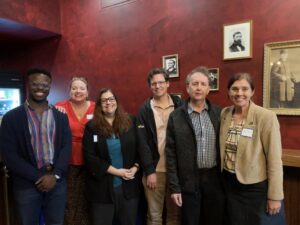
And some of the people solving them are, too.
2010: Three Machines and a Trip Report
The client was a pharmaceutical company with a Windows-centric IT department and limited Unix expertise. Its chemists relied on Schrödinger and Tripos software running across separate Linux systems.
The main cluster used Grid Engine over Gigabit Ethernet. A second, aging server had no job scheduler at all.
BioTeam’s consultants went on-site and documented what they found. The FLEXlm license server was working, and the chemistry software had been integrated with Grid Engine. But user IDs didn’t match between systems, clocks weren’t synchronized, scheduling was first-in, first-out, and Linux applications struggled to display on Windows desktops.
BioTeam recommended consolidating the environment, introducing fair-share scheduling, and rebuilding the systems.
The Years In Between
The same challenges persisted as the technology evolved.
In 2012, BioTeam was called in to troubleshoot another biotech’s chemistry cluster. Jobs were failing because of a broken MPI environment, outdated Schrödinger references in startup scripts, and system clocks that varied across nodes.
In 2013, BioTeam built the client a new computational chemistry cluster with InfiniBand networking and license-aware scheduling. Instead of failing when a software license was unavailable, jobs could wait for one.
In 2017, BioTeam relocated that cluster to the client’s new facility and updated its documentation.
Why did licensing matter so much? Commercial chemistry suites can have extraordinarily granular licensing. This client’s agreement covered more than 30 separately counted features shared between the cluster and chemists’ desktops. Getting full value from that investment meant teaching the scheduler to understand it.
2026: Rapid Automated Deployment
Fast forward to 2026.
A healthcare-focused investment firm needed a secure, repeatable HPC environment on AWS for the new biotech companies it funds.
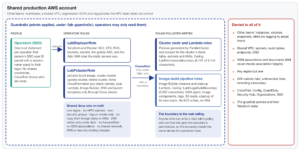
BioTeam built the environment as infrastructure-as-code. Schrödinger and Posit Workbvench & Posit PackageManager are automatically installed and tuned. License-aware scheduling is built in. Security guardrails, firewall inspection, and least-privilege identity are part of the foundation. Researchers work through Linux virtual desktops with GPU-accelerated graphics to support the responsive high-quality GUI that Schrödinger users require.
The result: HPC deployment dropped from weeks to ~1 day, and every new venture can start with the same proven environment. The reason this deployment takes roughly a day and not “minutes” is that even with automation there are certain tasks such as custom AMI building and unpacking/installing the large Schrödinger suite that, although requiring no human attention, still require several hours to complete and validate.
[Read the full case study.] https://bioteam.net/blog/case-studies/schrodinger-at-scale-enterprise-hpc-infrastructure-deployed-in-hours/
What Changed, and What Didn’t
In 2010, BioTeam was working with a small on-premises cluster built and rebuilt by hand. In 2026, we are deploying cloud HPC using version-controlled infrastructure as code.
But underneath those differences are familiar problems.
Licenses are still a scheduling problem. Expensive scientific software only delivers value when researchers can actually use it.
Identity is still infrastructure. Whether you are connecting two Linux systems or managing multiple AWS accounts, access has to be designed.
Consistency still matters. Hand-tuned environments drift. Automation makes them repeatable.
The researcher experience still matters. If accessing the environment is difficult, the sophistication of the environment does not matter much to the scientist trying to get work done.
The tools for solving these problems have changed enormously. The underlying challenges have not.
From Then to Your Now
Whether your research environment is running on a hand-tuned cluster, moving to the cloud, or somewhere in between, the fundamental questions remain familiar: How do you use expensive licenses efficiently? How do you keep environments consistent? How do you secure access without slowing scientists down? How do you give researchers an experience that just works?
The machines have changed. The infrastructure has changed. What matters is knowing how to solve the problems underneath them.
Contact BioTeam at info@bioteam.net to start a conversation.